Portico Arch Cat Scratcher — Architectural Curves, Corrugated Texture & Terracotta Color for Modern Homes
Portico Arch Cat Scratcher — Architectural Curves, Corrugated Texture & Terracotta Color for Modern Homes
Couldn't load pickup availability

Portico Arch Cat Scratcher — Architectural Curves, Corrugated Texture & Terracotta Color for Modern Homes
PORTICO · A SMALL ARCHITECTURAL STUDY
🏛️ An arch for the room. A discovery for the cat.
Pet furniture does not have to disappear into the background to belong in a carefully arranged home. Portico brings a recognizable architectural form to the cat corner: a warm terracotta-colored frame, an open doorway-like center and a densely layered brown scratching surface. Sage-colored feet add a small contrasting detail at floor level. The overall shape is direct and distinctive, without the visual clutter of dangling decorations or printed motifs.
From one angle, the frame reads as a simple rounded outline. Move to the side and the depth of the arch becomes more apparent, with the repeating texture carrying over the upper curve. That change in viewpoint is part of its appeal. Portico gives you a small interior object with a strong silhouette while keeping the scratching surface central to its identity.
Study 01 · Outline before ornament
The terracotta-colored border establishes the form with one continuous visual gesture. Upright sides rise into a rounded top, enclosing an open center rather than a closed box. This leaves a clear view through the piece and creates changing shadows inside the arch as the light moves through the room. The design feels substantial in outline but visually open in the middle.
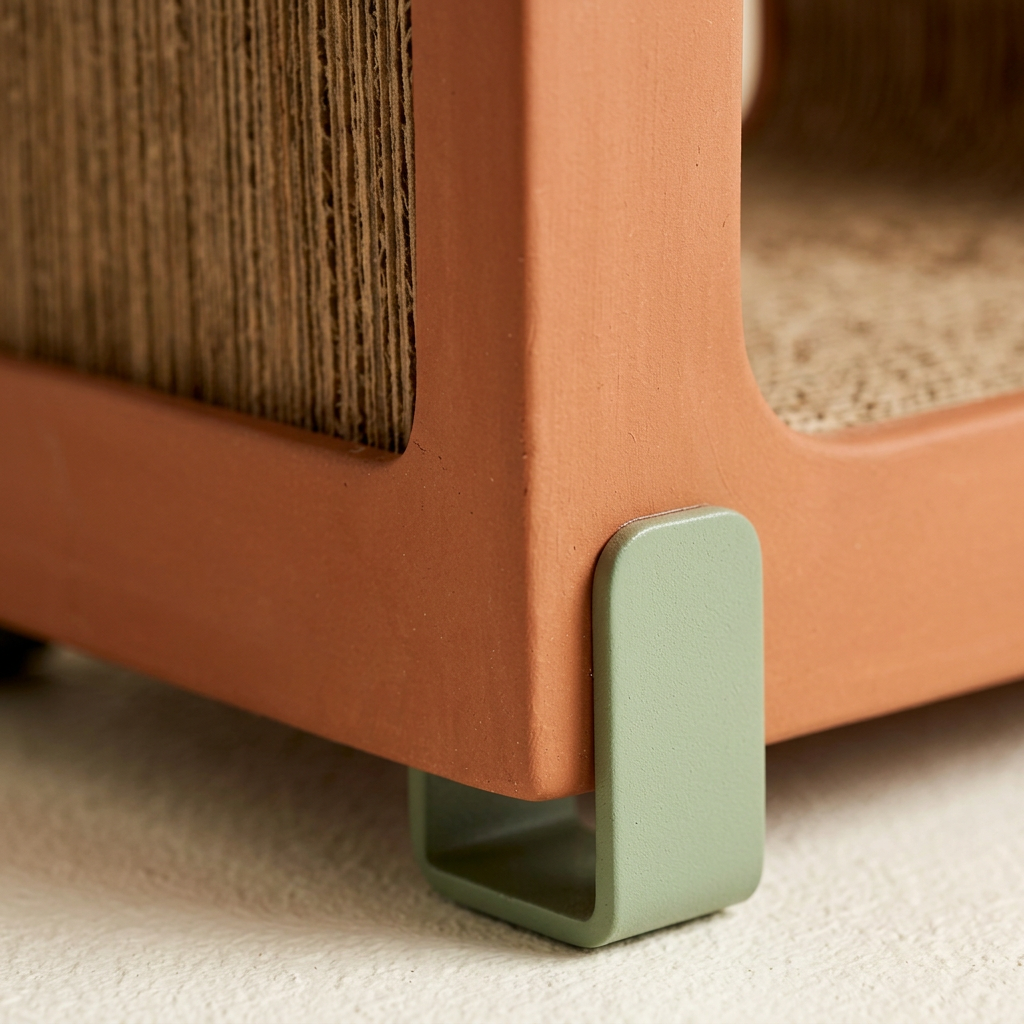
The sage-colored feet interrupt the warm palette in a restrained way. Their position at the bottom gives the eye a point of contrast without competing with the arch above. Against pale wood, they appear as a small cool accent; against a darker floor, the terracotta frame becomes the more prominent feature. The character comes from shape and color, not applied decoration.


Study 02 · The rhythm of the surface
Look closely at the brown corrugated texture. Repeating fine lines create a different visual rhythm from the broad, comparatively plain frame. Along the outer curve they follow the form upward; inside the opening, the layered appearance gives depth to the silhouette. It is this contrast between a clear border and a detailed center that makes the piece interesting at both a distance and close range.
The photograph shows the arrangement of the scratching texture, but it does not establish material grade, density, durability testing or a replaceable insert mechanism. Choose on the basis of the final product information as well as the design. A scratching accessory will need regular condition checks in use, particularly around edges and places your cat returns to repeatedly.
🐾 A place to investigate, without pressure
Choose a dry, level indoor floor and leave enough clear space around the piece for your cat to approach from more than one side. Start in a familiar area rather than placing it in the busiest route through the home. Keep the arch away from unstable furniture, hanging cords and objects that could fall if your cat brushes against them.
Let the first encounter be an investigation. Your cat may look, sniff, walk past or come back later. Do not push them through the opening, lift their paws onto the surface or treat a lack of immediate interest as a problem. A considered introduction gives the cat a choice. The product's appearance alone cannot guarantee a change in scratching habits or that a particular cat will use it.
Study 03 · The room around the arch
The lifestyle composition pairs the warm arch with a sage-toned sofa, light wood flooring and soft cream accents. You can borrow that relationship without copying the whole room: use an existing green cushion, a neutral wall or a simple wooden side table to echo one element of the palette. The arch needs little additional decoration to feel intentional.
Prioritize a practical floor location over a perfect photograph. Leave the opening unobstructed and keep breakable decor and trailing plants out of reach. A nearby resting area can make the accessory easy to notice, but it should not block your cat's established route through the room. Furniture and styling props in photographs are not included with the product.


A useful distinction: scratching accessory, not climbing tower
An architectural form can look like a tiny piece of furniture, but that does not establish a load-bearing rating. Do not treat Portico as a step stool, elevated perch, children's seat or platform for other objects. Keep it on the floor and assess its suitability from the final dimensions and product instructions rather than assuming the arch can support climbing.
Check that the overall footprint, opening and surface area are appropriate for your cat. A photograph with a cat is not a substitute for measurements, and individual animals vary in build and preferred posture. If the piece rocks, shifts excessively or is not a comfortable match, stop using it in that setup. No tested anti-slip or anti-tip performance is being claimed.
The maintenance margin
During routine checks, look at both the outer curve and the inner opening rather than inspecting only the most visible front edge. Remove loose debris and watch for worn areas, exposed joins or pieces that are coming away. Keep the surrounding floor clear so you can notice changes in the product's condition and prevent loose material from collecting unnoticed.
Follow the final care directions for cleaning. Do not assume that a corrugated-looking surface tolerates soaking, outdoor moisture or household sprays. Keep the accessory dry and stop using it if the frame becomes damaged, unstable or loose. Scratching wear is something to monitor, not proof that the piece will last for a promised number of weeks or months.

The final specification check
Before choosing Portico, review the final width, depth, height, opening dimensions, materials and care instructions. Confirm any weight or use limitations with the supplied product information. The image establishes a terracotta-and-sage design direction, not certified strength, sustainability credentials or compatibility with every cat. Those details should come from verified specifications rather than from a visual impression.
What remains distinctive is the composition itself: an open arch, a warm frame and a contrasting textured center. It gives the cat corner a clear visual identity while respecting the fact that the room is shared by people and pets. Let the form catch your eye, let the specifications guide the fit, and let your cat explore at their own pace.
The small accent that completes the arch
The lower-corner detail makes the three-part contrast especially clear: a warm terracotta-colored frame, a brown layered scratching surface and a cool sage-colored foot. The broad frame looks visually quiet beside the finer repeating texture. At the base, the green accent creates a small change of color that is easy to miss from across the room but important to the overall composition.
This close view is about appearance rather than a claim about how the foot attaches or whether it can be removed. Follow the supplied product instructions for setup and care, and keep the accessory on a suitable level floor. A visible foot does not establish an anti-tip, anti-slip or load-bearing rating.